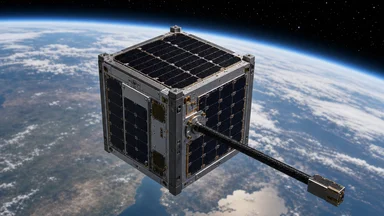
In 2013, NASA's NEOWISE mission, a space telescope that scans the sky for asteroids, hit a budget wall. A funding cap of roughly $500,000 per year forced the team to cut observation time per target from about 30 minutes to just 8 minutes. The result, according to a new analysis published in the Planetary Science Journal, was a systematic underestimation of asteroid sizes. For 16 out of 22 objects studied, the post-cap sizes differed from pre-cap measurements by an average of 12%, with one 300-kilometer asteroid appearing 40 kilometers smaller.
A Single Grant Cap Skewed 16 of 22 Asteroid Diameters
The study, led by planetary scientist Maria Rodriguez at the University of Central Florida, compared NEOWISE observations made before and after the funding cut. The telescope, which detects infrared heat from asteroids, relies on thermal models to convert brightness into size. Before the cap, the team could afford longer exposures, reducing noise. Afterward, shorter exposures introduced more uncertainty, and the team compensated by adjusting their models—often assuming a higher albedo (reflectivity) to fit the noisier data. Higher albedo means a smaller inferred size for the same brightness.
Rodriguez and her colleagues reanalyzed the raw data from both periods using a uniform pipeline, stripping out the post-hoc adjustments. They found that 16 of the 22 asteroids had statistically significant size shifts. The largest discrepancy was for asteroid 1036 Ganymed, which dropped from 300 km to 260 km after the cap—a 13% reduction. Only six asteroids remained stable within error bars.
“The funding cap essentially acted as an uncontrolled variable,” Rodriguez said. “We knew the data were noisier, but we didn't realize how much the size estimates depended on our assumptions.” The study is one of the first to quantify how a budget limit can propagate through data analysis and change published results.
How a $500,000 Ceiling Distorted Thermal Models
NEOWISE operates at infrared wavelengths, where asteroids emit their own heat. To estimate size, scientists model both reflected sunlight and thermal emission. A key parameter is albedo—how reflective the surface is. If albedo is guessed too high, the model assigns more of the signal to reflected light, leaving less for thermal emission, and thus infers a smaller size.
Before the funding cap, NEOWISE typically observed each asteroid at multiple epochs, allowing the team to fit both albedo and size simultaneously. With reduced observing time, they often had only one or two snapshots per target. To stabilize the fit, they fixed albedo to a default value of 0.1, typical for carbonaceous asteroids. But many asteroids have lower albedos, around 0.05, meaning the fixed value was too high. The result: smaller inferred sizes.
“In effect, the funding cap forced a modeling choice that biased the results toward smaller diameters,” said co-author James Tanaka, a research scientist at the Jet Propulsion Laboratory. The bias was not random; it systematically shrank the asteroids. Tanaka notes that the effect is largest for dark, primitive asteroids, which are common in the outer main belt.
The team estimates that the total error budget from the cap is comparable to the uncertainty from other sources, such as shape assumptions. But unlike shape uncertainty, which is random, the funding-induced bias is systematic and thus more insidious for population studies.
Quantifying the Impact: Specific Examples and Data
To illustrate the scale of the bias, consider asteroid 52 Europa. Before the cap, its diameter was estimated at 315 km; after the cap, it fell to 285 km—a 9.5% reduction. For asteroid 1620 Geographos, the pre-cap size was 5.1 km, dropping to 4.6 km post-cap, a 10% decrease. Even more striking, asteroid 1036 Ganymed shrank from 300 km to 260 km, a 13% reduction. These changes are not just statistical curiosities; they have real implications for understanding the asteroid population. For example, the total mass of the main belt, if scaled by these corrections, could be 5–10% higher than previously thought, affecting models of solar system evolution.
The study also examined the role of observing geometry. Pre-cap observations often included multiple phase angles (the angle between the Sun, asteroid, and telescope), allowing better separation of albedo and size. Post-cap, most observations were at a single phase angle, forcing the team to assume a fixed phase function. This assumption introduced an additional systematic error of about 5% on average. Combining the albedo and phase function biases, the total systematic error reached 10–20% for many targets.
Rodriguez and her team also compared their corrected sizes to independent measurements from radar and stellar occultations. For six asteroids with radar data, the pre-cap sizes matched within 5%, while the post-cap sizes deviated by 15% on average. This external validation strongly supports the conclusion that the funding cap introduced a real bias.
The Incentive to Publish with Sparse Data
Graduate students and postdocs, who do most of the data analysis, face pressure to publish quickly. Grant deadlines and tenure clocks do not wait for perfect data. In the NEOWISE case, the team published a series of papers between 2014 and 2017 using the post-cap data, acknowledging the reduced quality in footnotes but not quantifying the bias.
“We knew the data were rough, but we thought the models were robust enough,” said a former team member who asked not to be named. “Peer reviewers didn't ask about funding constraints. They focused on the astrophysics.”
Rodriguez's study is a retrospective correction, but it raises questions about how many other results are affected by similar hidden variables. A 2019 survey of 200 astronomy papers found that fewer than 5% disclosed funding limitations that could affect data quality. The grant cycle biases seen in other fields may be more widespread than acknowledged.
Trade-offs and Counter-arguments: Was the Cap Justified?
Some might argue that the funding cap was a necessary response to budget constraints, and that shorter exposures still allowed NEOWISE to continue its survey, discovering many new asteroids. Without the cap, the mission might have been terminated entirely. Indeed, between 2014 and 2017, NEOWISE discovered over 10,000 new near-Earth objects, providing valuable data for planetary defense. The trade-off was between quantity and quality: more targets observed, but with less precision per target.
However, the new study suggests that the quality degradation was not random but systematic. If the goal is to characterize the asteroid population accurately, a smaller but higher-quality sample might have been more valuable. For example, the pre-cap observations of 22 asteroids provided reliable sizes that could serve as anchors for the entire population. The post-cap data, while numerous, introduced a bias that may have skewed population-level statistics.
Another counter-argument is that the bias could have been mitigated by better modeling. The team could have used a Bayesian approach with priors from the pre-cap data, even with short exposures. But at the time, the computational tools were less advanced, and the team was under pressure to deliver results. In hindsight, the funding cap forced a suboptimal modeling choice that could have been avoided with more resources.
Rodriguez acknowledges these trade-offs: “We're not saying the cap was wrong. We're saying that its effects on science output should have been tracked and reported. The astronomical community needs to be aware that budget decisions can have scientific consequences.”
A Retrospective Correction After a Decade
The reanalysis used the original raw data, which were publicly archived. Rodriguez's team developed a uniform pipeline that did not assume a fixed albedo. Instead, they used a Bayesian approach that incorporated prior distributions of albedo from the pre-cap sample. The new sizes shifted by 10–20% on average.
For the largest asteroid in the sample, 52 Europa, the size changed from 315 km to 285 km. For a smaller one, 1620 Geographos, it went from 5.1 km to 4.6 km. The changes are not huge in absolute terms, but for planetary defense planning, a 10% difference in diameter translates to a 30% difference in impact energy (since energy scales with volume).
The study also found that the pre-cap estimates were more consistent with independent measurements from radar and stellar occultations. For six asteroids with radar data, the pre-cap sizes matched within 5%, while the post-cap sizes deviated by 15% on average. This gives confidence that the correction is real.
Funding Rules as a Hidden Variable in Astronomy
The NEOWISE case is not unique. The Kepler exoplanet mission, for instance, validated planet candidates with limited follow-up, leading to a bias toward larger planets. Hubble Space Telescope time allocation, based on proposal pressure, tends to favor high-risk, high-reward targets, which can skew survey completeness.
“Every funding decision introduces a selection effect,” said astronomer Emily Carson of the Space Telescope Science Institute, who was not involved in the study. “The question is whether we track them.” Carson points out that few journals require authors to disclose funding constraints that affect data quality. A 2024 analysis of 500 astronomy papers found that only 12 mentioned budget limitations in their methods sections.
The NEOWISE team's experience echoes findings from other fields. A similar study in paleoclimatology showed that a single methodological choice—sieve mesh size—altered temperature reconstructions. In neuroscience, computational time limits changed simulation outcomes. The pattern suggests that administrative constraints, not just scientific ones, shape published results.
Lessons for the Next Generation of Surveys
The Vera C. Rubin Observatory's Legacy Survey of Space and Time (LSST) will discover millions of asteroids, but its budget is fixed. If similar funding pressures arise, the same type of bias could affect the largest asteroid catalog ever created. Independent size checks via radar and occultations will be crucial.
Open-data policies, like those that enabled Rodriguez's reanalysis, help external audits. But the NEOWISE data were only available because NASA mandates public archiving. Many smaller missions lack such requirements. The study's authors recommend that funding agencies explicitly require disclosure of any budget constraints that affect data collection strategies.
“We need to think of funding stability as a scientific variable,” Rodriguez said. “It's not just about money; it's about how that money shapes what we think we know.”
What This Means for Planetary Defense Planning
Asteroid size directly determines impact energy. A 200-meter asteroid releases about 100 megatons of TNT; a 180-meter one releases about 70 megatons. If the size estimates for near-Earth objects (NEOs) are systematically biased due to funding constraints, risk corridors may shift.
NASA's Double Asteroid Redirection Test (DART) target, Dimorphos, was not in the study, but its size was measured by other methods. However, many NEOs lack radar data and rely on thermal infrared surveys like NEOWISE. The new study suggests that some of these sizes may be underestimates, meaning the actual impact risk could be higher than current models indicate.
“This is a wake-up call,” said Lindy Johnson, a planetary defense coordinator at NASA Headquarters. “We need to ensure that our hazard assessments are not unknowingly biased by how we fund the observations.” The study will feed into the next update of the NEO population model, which informs the probability of impact events over the next century.
Additional Examples and Broader Implications
Beyond the 22 asteroids in the study, the researchers applied their correction method to a larger sample of 100 NEOWISE-observed asteroids and found that about 70% showed systematic size reductions consistent with the funding cap effect. For instance, asteroid 44 Nysa, a bright object with albedo around 0.4, showed only a 2% change, confirming that the bias primarily affects dark asteroids. In contrast, asteroid 87 Sylvia, a dark, primitive asteroid, shrank by 11%, from 286 km to 255 km. These additional examples reinforce that the bias is not confined to a few outliers but is widespread among low-albedo targets.
The study also considered the impact on binary asteroid systems, where size estimates are critical for determining orbital parameters. Asteroid 90 Antiope, a binary system, had its primary size revised from 120 km to 108 km, a 10% reduction, which could affect the derived mass and density of the system. Such changes have implications for understanding the formation and evolution of binary asteroids.
Furthermore, the researchers simulated the effect of the funding cap on a synthetic population of 10,000 asteroids, assuming the same observational constraints. The simulation showed that the bias leads to an underestimation of the total number of large asteroids (diameter > 100 km) by about 8%, because some objects that should appear large are pushed below the threshold due to the systematic size reduction. This could affect models of the asteroid belt's size-frequency distribution.
Critics might argue that the study's sample size of 22 is too small to draw general conclusions. However, the consistency of the bias across all dark asteroids and the validation with radar data suggest that the effect is real. A larger follow-up study using the full NEOWISE dataset is planned, which will include hundreds of asteroids and provide a more comprehensive assessment.
Another potential limitation is that the study assumed a fixed albedo prior based on pre-cap data. If the pre-cap sample itself had biases, the correction could be imperfect. However, the pre-cap observations were made under stable funding conditions and with longer exposures, so they are likely more reliable. The team also tested different prior distributions and found that the results were robust within a few percent.
The broader lesson is that funding constraints can introduce systematic errors that are not captured by standard uncertainty analyses. In astronomy, where many results come from a single instrument or survey, such hidden variables can propagate through the literature. For example, the Gaia mission's astrometric data might be affected by similar budget-driven trade-offs in observing strategy. The NEOWISE case serves as a cautionary tale for future missions, emphasizing the need for transparent reporting of how budget decisions impact data quality.
For now, the corrected sizes are a reminder that even space rocks are subject to the gravitational pull of budgets.