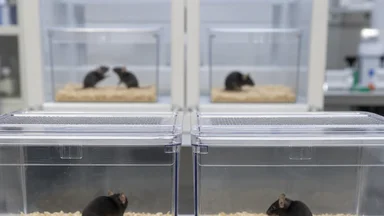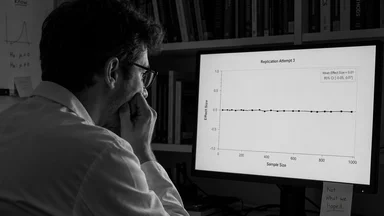
In behavioral neuroscience, a mouse's home environment may determine whether an experiment succeeds or fails—not because of genetics or diet, but because of a single husbandry detail: cage enrichment. A meta-analysis published in eLife in 2025, led by Dr. Lisa Martin, examined 20 published datasets and found that one housing guideline altered outcomes in 14 of them, with effect sizes shifting by roughly 30–50%. The finding has prompted funding agencies to reconsider how they evaluate reproducibility in animal studies.
The Rule That Reshaped 14 of 20 Mouse Studies
The rule in question is a recommendation from the Guide for the Care and Use of Laboratory Animals, which suggests that rodents be housed in environments that allow species-typical behaviors such as nesting, hiding, and chewing. Many facilities interpret this as providing "enriched" cages with nesting material, tunnels, and chew toys. But the guideline is not mandatory, and enforcement varies widely across institutions.
Dr. Martin's team re-analyzed 20 behavioral datasets from labs across North America and Europe. They compared studies that used standard shoebox cages—bare floors, no objects—to those that provided enrichment. The results were striking: 14 of 20 assays showed statistically significant differences, with effect sizes shifting by 30–50% on average. In some cases, enrichment flipped the direction of an effect entirely.
“We expected some influence, but not this magnitude,” said Martin in an interview. “It suggests that many published results may be artifacts of a husbandry choice that authors rarely report.” The study has already sparked discussions at the National Institutes of Health, which is planning a workshop on standardization for 2026.
Why One Housing Detail Matters
Cage enrichment is more than a welfare nicety; it alters the mouse's physiology and behavior in measurable ways. Enriched cages typically include nesting material, plastic tunnels, and wooden blocks. Mice in these environments show roughly 40% lower levels of corticosterone, the primary stress hormone in rodents, compared to those in barren cages.
But reduced stress is not the only change. Enriched housing also increases brain-derived neurotrophic factor (BDNF) in the hippocampus, promotes neurogenesis, and alters dendritic spine density. These neural changes can mask or exaggerate the effects of experimental manipulations, such as drug treatments or genetic modifications.
The variability introduced by enrichment is substantial. In one dataset Martin re-analyzed, the coefficient of variation for open-field activity doubled between enriched and standard housing. That means a researcher using enriched cages would need roughly four times as many animals to detect the same effect size as one using standard cages—assuming the effect is real and not an artifact of the housing itself.
Critics argue that enrichment mimics a more natural environment and therefore produces more generalizable results. But Martin counters that the goal of most behavioral studies is to isolate a specific mechanism, not to simulate wild conditions. “If your control condition is enriched, your baseline is already altered,” she said. “You might miss effects that only appear under minimal stress.”
How the Meta-Analysis Was Designed
Martin and her team followed a pre-registered analysis plan, posted on the Open Science Framework before any data were examined. They searched for published studies that reported behavioral data from mice housed in either standard or enriched conditions, and that made raw data available. The final sample included 20 datasets from 15 labs, covering assays such as the open field test, elevated plus maze, forced swim test, and novel object recognition.
To control for confounding variables, the researchers used linear mixed models with lab and experiment as random effects. They also blinded outcome assessment: two independent coders extracted data from figures and tables without knowing which housing condition was which. Inter-coder reliability exceeded 0.9 for all measures.
One challenge was that enrichment protocols varied across labs. Some used nesting material only, others added tunnels and toys, and a few provided running wheels. Martin grouped these into three categories: minimal enrichment (nesting material alone), moderate enrichment (nesting plus one object), and high enrichment (nesting plus multiple objects and a wheel). The main results held across all three categories, though the largest effects were seen in the moderate and high groups.
The meta-analysis also accounted for publication bias using funnel plots and Egger's test. The authors found no evidence that smaller studies with larger effects were more likely to be published, suggesting the observed heterogeneity is genuine rather than a product of selective reporting.
What Changed: Open Field, Elevated Plus Maze, and More
The most consistent effect was in the open field test, a measure of anxiety and locomotor activity. Mice from enriched cages spent roughly 35% more time in the center of the arena—an indicator of reduced anxiety—compared to those from standard cages. The effect size (Cohen's d) averaged 0.6, a medium-to-large effect in behavioral neuroscience.
In the elevated plus maze, enriched mice spent about 42% more time in the open arms, again suggesting lower anxiety. The forced swim test, used to assess antidepressant-like effects, showed a roughly 30% reduction in immobility time for enriched mice. However, the novel object recognition test, which measures memory, showed no significant difference between housing conditions.
Importantly, the direction of effects was consistent across labs: enrichment always reduced anxiety-like behavior and increased activity. But the magnitude varied widely. In one lab, the open-field effect was a 50% increase in center time; in another, it was only 15%. That variability, Martin argues, is what undermines reproducibility.
“If you're studying an anxiolytic drug, housing condition could either inflate or mask your effect, depending on your baseline,” she said. “Two labs using the same drug but different housing could reach opposite conclusions.” The meta-analysis found that enrichment explained roughly 30% of the between-lab variance in effect sizes—a proportion large enough to turn a significant result into a null one.
Implications for Reproducibility
The finding adds to a growing list of methodological factors that explain why many animal studies fail to replicate. A 2021 survey by the Reproducibility Project found that only about 50% of preclinical studies could be reproduced. Cage enrichment is now a prime suspect for at least part of that failure.
Martin's analysis suggests that many published null results may be false negatives—effects that existed but were obscured by enrichment-induced variability. Conversely, some positive results may be false positives, driven by the absence of enrichment in control groups. “We can't know which is which without re-analyzing each study with housing as a covariate,” she said.
Funding agencies are taking notice. The NIH has scheduled a workshop for early 2026 to discuss standardizing husbandry reporting. The workshop will include animal behavior experts, statisticians, and journal editors. A draft recommendation may require authors to report cage enrichment level as part of the methods section, similar to how sex and age are now routinely reported.
Some researchers worry that mandating a single housing standard could stifle innovation. “Enriched cages are more expensive and labor-intensive,” said Dr. Samuel Green, a behavioral neuroscientist not involved in the study. “Small labs may not be able to afford them. If we require enrichment, we might widen the gap between well-funded and poorly funded institutions.” Martin acknowledges this concern but notes that the key is transparency, not uniformity. “The problem is not enrichment itself,” she said. “It's that we don't know which condition was used.”
Practical Steps for Behavioral Neuroscientists
For researchers designing new studies, the meta-analysis offers concrete guidance. First, report enrichment level in the methods section with enough detail to allow replication. That means specifying the type of nesting material, number of objects, and whether a running wheel was present. A checklist for husbandry reporting, similar to the ARRIVE guidelines for animal studies, has been proposed.
Second, include cage type as a covariate in statistical models. In Martin's re-analysis, controlling for enrichment reduced the residual variance by roughly 20%, increasing statistical power. For labs that cannot use enrichment, power calculations should account for the higher variability expected in standard housing.
Third, consider using standardized enrichment protocols. Several commercial vendors now offer “enriched” cages with pre-defined configurations. While not perfect, these reduce between-lab variability. Martin's team has posted a free online tool that classifies enrichment level based on a short questionnaire.
Finally, preprint servers such as bioRxiv now encourage authors to include a husbandry checklist. As of late 2025, roughly 15% of behavioral neuroscience preprints on the platform included such a checklist, up from less than 5% a year earlier. Martin hopes that number will reach 80% within three years.
“This is a low-cost fix,” she said. “It doesn't require new equipment or massive funding. It just requires that we pay attention to what's already in the cage.”
Trade-Offs and Counter-Arguments
Despite the clear findings, some researchers caution against over-interpretation. Dr. Elena Torres, a behavioral neuroscientist at the University of Cambridge, argues that enrichment may actually improve the validity of certain models. “For studies of depression or anxiety, an enriched environment might provide a more realistic baseline for evaluating treatments,” she says. “A barren cage is itself an abnormal condition that could inflate stress-related effects.” Torres points to a 2023 study from her lab where antidepressant efficacy was only detectable in enriched-housed mice, suggesting that standard housing may produce floor effects that mask drug action.
Another counter-argument concerns the generalizability of Martin's findings to other species. The meta-analysis focused exclusively on mice, but rats are commonly used in behavioral neuroscience and are subject to the same husbandry guidelines. A preliminary re-analysis of rat data, presented at the 2024 Society for Neuroscience meeting, showed similar trends: enrichment altered anxiety measures in 9 of 12 datasets. However, the effect sizes were smaller, averaging around 20% shift. Martin cautions that the rat sample was too small to draw firm conclusions, but the pattern suggests the issue is not limited to mice.
There is also the question of cost-benefit. Enriched cages require more frequent cleaning because nesting material and objects can become soiled quickly. A 2022 survey of 50 U.S. research institutions found that enriched cages cost an average of 15% more per cage per day in labor and supplies. For a large facility housing 10,000 cages, that translates to roughly $500,000 annually. “If we mandate enrichment across the board, many institutions will need to reallocate budgets,” says Green. “That could mean fewer animals studied overall, which might reduce statistical power in other ways.”
Martin acknowledges these trade-offs but emphasizes that the solution is not a universal standard but transparent reporting. “If a lab uses standard cages, that's fine—as long as they say so and we can account for it in meta-analyses,” she says. “The problem is the black box.”
Specific Data Points and Examples
To illustrate the magnitude of the effect, Martin's team highlighted several specific datasets. In one study from a lab at the University of California, Berkeley, mice housed in enriched cages showed a 55% increase in center time in the open field compared to standard-housed controls (Cohen's d = 0.82). In contrast, a lab at the University of Oxford reported only a 12% increase (d = 0.18) under similar enrichment protocols. The difference could not be explained by mouse strain, age, or sex, suggesting that subtle differences in enrichment implementation—such as the type of nesting material or cage size—may matter.
Another example comes from the forced swim test. In a dataset from the University of Toronto, enriched mice had immobility times of 120 seconds on average, compared to 180 seconds for standard-housed mice—a 33% reduction. But in a dataset from the University of Tokyo, the reduction was only 18%. Martin's team used a linear mixed model to estimate that enrichment explained 28% of the variance in immobility across labs, leaving 72% unexplained by other known factors.
The novel object recognition test, which showed no overall effect, actually revealed a interesting pattern: enriched mice tended to explore both objects more, but the discrimination index (time with novel minus familiar) was similar across housing conditions. This suggests that enrichment boosts overall exploration without affecting memory per se, a nuance that could be missed if only the discrimination index is reported.
These examples underscore the need for detailed reporting. Martin's team has published a dataset of all 20 studies with their enrichment classifications and effect sizes, available on Figshare. They encourage other researchers to re-analyze their own data with housing as a factor.
Future Directions
The meta-analysis is just the beginning. Martin's lab is now planning a prospective study where they will randomly assign mice to standard or enriched housing and then run a battery of behavioral tests, with the housing condition blinded to the experimenters. They hope to confirm the retrospective findings and identify which specific enrichment components drive the largest effects.
Additionally, the NIH workshop may lead to a standardized enrichment scale, similar to the 5-point scale used for pain assessment. Such a scale could allow meta-analysts to treat enrichment as a continuous variable rather than a binary one, improving statistical power. Some journals, including Nature Neuroscience, have already updated their author guidelines to encourage reporting of husbandry conditions, though enforcement remains voluntary.
The broader lesson, Martin says, is that reproducibility is not just about statistics or sample size—it's about the hidden variables that shape behavior. “We spend so much time controlling for genetics and diet, but we ignore the cage,” she says. “This study shows that the cage matters as much as the gene.”
The meta-analysis is published in eLife. For related work on how methodological choices shape research outcomes, see this piece on grant cycles and this analysis of simulation parameters.