The Georgian Military Highway in November is a different beast. The summer crowds have vanished, the permit fees at Kazbegi National Park drop from 50 to 25 GEL, and the Tergi River—swollen by autumn rains—opens for a brief rafting season that runs roughly through mid-November. For the traveler willing to pack warm layers and plan ahead, this is the month to see the Caucasus without the queues.
Why November on the Georgian Military Highway Means Cheaper Permits and Empty Roads
Entry to Kazbegi National Park—the protected area around Mount Kazbek and the Gergeti Trinity Church—costs 25 GEL per person in November, half the peak-season rate of 50 GEL. The reduction applies from November 1 through March 31, according to the park's published fee schedule. Stepantsminda, the main town and gateway, sees guesthouse prices drop to roughly 60–80 GEL per night, compared to 120–150 GEL in July and August. For example, Guesthouse Tamara offers rooms for 60 GEL in November, while the same room costs 130 GEL in August. This price difference can save a family of four around 280 GEL over a three-night stay.
Snow closures on the Military Highway are rare before December. The road from Tbilisi to Stepantsminda, which climbs to the Jvari Pass at nearly 2,400 meters, remains open as long as there is no heavy snowfall. Local drivers say the first significant snow typically arrives in late December, but November can bring icy patches, especially in the morning. Winter tires are advisable, though not legally required until December 1. In November 2025, a traveler reported icy conditions near the Jvari Pass at 8 a.m., but the road was clear by midday. Checking the weather forecast for Gudauri before departure is recommended.
The rafting season on the Tergi River begins in November, when water levels rise after autumn rains. Operators such as Caucasian Adventures run trips through roughly November 15, charging around 120 GEL per person for a half-day run through the Tergi Gorge. The water is cold—around 6–8°C—and wetsuits are provided. The season is short; by December the river often runs too low or freezes. In 2025, the rafting season ended on November 17 due to a sudden drop in water levels. Booking in advance is essential, as only one operator runs trips in November.
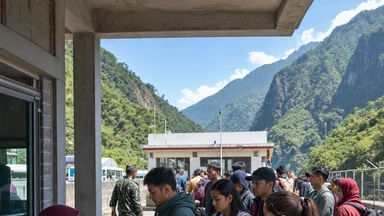
The permit queue at the Gudauri visitor center, which processes park entries and camping permits, is empty by 9 a.m. in November. In summer, waits of 30–45 minutes are common. The center is open daily from 8 a.m. to 6 p.m., but staff may leave early if no visitors arrive. It is best to arrive before noon. A traveler in November 2025 reported arriving at 11 a.m. to find the center closed, as staff had left for lunch early. Calling ahead to confirm hours is advisable.
The Permit Puzzle: What You Need Before You Drive North from Tbilisi
Overnight stays inside Kazbegi National Park require a permit obtained either online via the government portal mpa.gov.ge or in person at the Stepantsminda ranger station. The online system is straightforward for those with a Georgian phone number; foreigners can use a hotel number. Permits are free for day visits, but overnight camping costs 25 GEL per person per night. Wild camping—setting up outside designated sites—is banned within park boundaries. Rangers patrol the Gergeti glacier trail and the Truso valley. In November 2025, a group was fined 100 GEL for wild camping near the Gergeti glacier.
Fire permits are separate and free, issued at the Gudauri post. You must present a valid ID and declare your campsite location. Campfires are allowed only in designated fire rings; gathering dead wood is permitted but discouraged. The permit is valid for 72 hours and can be renewed. A traveler in November 2025 reported that the ranger at Gudauri issued a fire permit in under 10 minutes, but warned that fires must be fully extinguished by 10 p.m.
If you plan to travel beyond Kazbegi toward the Russian border—say, to the village of Sno or the Truso Gorge—you need a border zone pass. This is a separate document, not a park permit. Apply at least 10 days in advance through the Georgian Ministry of Internal Affairs website or at a service center in Tbilisi. Without it, you will be turned back at the checkpoint just north of Stepantsminda. The pass is free and valid for one year. In November 2025, a traveler was denied entry to the Truso Gorge because their pass had expired; they had to reapply and wait 10 days.
Group sizes over 12 people require advance notification to the park office, submitted at least two weeks ahead. This rule is rarely enforced in November because groups that large are uncommon off-season, but the regulation exists. Drone use is banned throughout the national park; confiscation at the gate has been reported twice in 2025, according to local guides. One traveler in November 2025 had their drone confiscated at the Gudauri checkpoint and had to pay a 200 GEL fine to retrieve it.
Three Days at a Humane Pace: Tbilisi to Stepantsminda and Back
A three-day trip from Tbilisi to Stepantsminda and back is the most common itinerary for November. Day one: take a marshrutka from Didube station to Gudauri (roughly 15 GEL, 2.5 hours), then hike to the Gergeti Trinity Church. The trail from Stepantsminda is a steady 1.5-hour climb on a dirt road. In November, the church is often empty; you may share the view only with a few local dogs. Return to Stepantsminda for the night at Guesthouse Tamara, which charges around 60 GEL per night including breakfast. Alternatively, Guesthouse Kazbegi offers rooms for 80 GEL with a view of Mount Kazbek.
Day two: raft the Tergi Gorge with Caucasian Adventures. The half-day trip includes transport from Stepantsminda, wetsuit, helmet, and guide. The river runs through a steep canyon with Class II–III rapids in November. The trip ends around lunchtime. Spend the afternoon walking the streets of Stepantsminda, visiting the small museum of local history (free entry), or soaking in the sulfur baths at the public bathhouse (15 GEL per hour). The museum features exhibits on the history of the Military Highway, including artifacts from the 19th century.
Day three: drive or marshrutka back to Tbilisi, stopping at Ananuri fortress and the Zhinvali reservoir. The fortress, a 17th-century complex overlooking the reservoir, charges 7 GEL entry. The reservoir itself is a popular photo stop. The drive takes roughly three hours with stops. Park gates on the highway are open 8 a.m. to 6 p.m., so aim to leave Stepantsminda by 10 a.m. to have daylight for the return. In November, sunset is around 5:30 p.m., so leaving earlier is advisable if you want to take photos at the reservoir.
This itinerary does not require a border zone pass, as it stays within the main tourist zone. It is suitable for travelers with limited time or those testing the off-season waters. The pace is deliberately slow: one major activity per day, with room for rest and spontaneous detours. For example, you could spend an extra hour at Ananuri exploring the fortress towers.
Seven Days for the Determined: Adding Sno Valley and Truso Gorge
With a full week, you can extend into the Sno Valley and the Truso Gorge. Days four and five: stay with a shepherd family in Sno Valley through a homestay arranged via the Stepantsminda tourist office. The cost is roughly 80 GEL per person per night, including dinner and breakfast. The valley is a high-altitude pastureland with scattered stone towers; in November the shepherds are bringing flocks down for winter, so you may witness the seasonal migration. No permit is needed for the valley itself, but a border zone pass is required if you hike beyond the village of Sno toward the Russian border. The homestay experience includes traditional Georgian meals like khachapuri and khinkali, and the family may offer to show you how to make cheese.
Day six: hike the Truso Gorge, a 14-kilometer round trip from the village of Juta. The trail follows the Tergi River upstream past abandoned villages and mineral springs. A permit is required—obtain it at the Juta ranger station, which is open irregularly in November. The trail reaches an altitude of roughly 2,800 meters, so altitude adjustment is necessary. November temperatures at that elevation can drop to -5°C at night; start early and carry warm layers, water, and a headlamp. In 2025, a hiker reported that the trail was icy in the morning but manageable with microspikes.
Day seven: rest day in Stepantsminda. The sulfur baths are a good option, as is a short walk to the Gveleti Waterfalls, a 40-minute drive north. The falls are less crowded in November, but the path can be muddy. Alternatively, spend the day reading in a guesthouse garden or sampling local khinkali at a family-run restaurant. The slow pace is deliberate—this is not a checklist itinerary. The sulfur baths are particularly relaxing after a long hike, and the public bathhouse in Stepantsminda offers private rooms for 15 GEL per hour.
The seven-day version requires a border zone pass for the Truso Gorge hike. Apply for it at least 10 days before departure. The pass is free but must be printed and carried. Without it, you will be turned back at the Juta checkpoint. In November 2025, a traveler who forgot their printed pass was denied entry and had to return to Stepantsminda to print it.
Fourteen Days: The Full Loop Including Tusheti's Closed Gates
For those with two weeks, a loop east into Khevsureti and toward Tusheti is possible, though with caveats. Week two: drive east from Stepantsminda via the Datvisjvari pass to the village of Shatili. The road is unpaved and rough; a 4x4 is recommended. Shatili fortress, a UNESCO-listed complex of stone towers, is open year-round with an entry fee of 7 GEL. The museum inside the fortress is closed in winter, but the exterior is worth the drive. In November, the road can be muddy after rain, so check conditions with the Stepantsminda tourist office before departing.
Tusheti National Park, further east, has its gates locked from November 1 until May. There is no access—not even on foot—because the only road, the Abano pass, is closed by snow. Do not attempt to reach Tusheti in November; the park administration is clear that the gate is locked and patrolled. Instead, consider the Ardoti valley hike from the village of Barisakho, which is accessible via a paved road. The hike requires a free permit from the Barisakho ranger station, open weekdays 9 a.m. to 5 p.m. The Ardoti valley offers views of medieval towers and is less known than Tusheti, making it a peaceful alternative.
Return to Tbilisi via Tianeti and the Gombori pass. The road is paved but winding; allow five hours for the drive. Tianeti has a small market and a few guesthouses if you need to break the journey. The Gombori pass offers views of the Caucasus foothills, but in November fog can obscure the vista. A traveler in November 2025 reported that the fog lifted by midday, revealing stunning views of the Alazani Valley.
The two-week loop is best done with a rented car. Marshrutka service to Shatili is irregular in November, and no public transport runs to Barisakho. Fuel stations are scarce east of Stepantsminda; fill up in Gudauri or Tbilisi. The loop is demanding but rewarding for those who want to see the less-visited corners of the Greater Caucasus. Renting a 4x4 from Tbilisi costs around 150 GEL per day, including insurance.
Common Refusals at the Gate and How to Avoid Them
The most common refusal at the Gudauri checkpoint is lack of a printed permit. Rangers do not accept digital copies on phones. Print two copies—one for the gate, one for your records. The second most common issue is winter tires. While not legally required until December, rangers may deny entry after the first snowfall if your car lacks them. Anecdotally, a traveler in November 2025 was turned back because his rental car had summer tires and a light dusting of snow had fallen overnight. Renting winter tires from a Tbilisi garage costs around 50 GEL per day.
Missing a border zone pass is another frequent problem. The checkpoint north of Stepantsminda is staffed 24/7, and guards check every vehicle. Without the pass, you cannot proceed to Sno, Truso, or the Russian border. Apply early—the 10-day processing time is firm. Group size over 12 requires advance notification; this rule is often overlooked but can be enforced. Two reports from 2025 mention guided groups being denied entry because the leader had not filed the notification.
Drone use is banned, and confiscation is possible. In 2025, two drones were confiscated at the Gudauri gate and returned only after the owners paid a fine at the Stepantsminda police station. If you plan aerial photography, leave the drone at home or risk losing it. Finally, campfires outside designated rings are prohibited. Rangers patrol the Gergeti glacier trail and issue on-the-spot fines of 100 GEL for violations. A traveler in November 2025 was fined for having a small cooking fire outside a designated ring.
The Off-Season Trade-Off: Half the Crowds, Double the Planning
November in the Georgian Caucasus is a trade-off. The crowds are thin—you might have the Gergeti glacier trail entirely to yourself—but the infrastructure is scaled back. Rafting operators run only through roughly November 15. Guesthouses close by December 1; book ahead or risk sleeping in your car. Marshrutka frequency drops from several daily departures to once daily after October, so check the schedule at Didube station the day before. For example, the marshrutka to Stepantsminda departs at 9 a.m. in November, compared to every hour in summer.
The Gudauri ski lift, which offers cable-car views in winter, is closed until December. There is no alternative way to get panoramic views except by hiking. The weather is unpredictable: sunny days alternate with rain and sleet. Pack waterproof boots, a down jacket, and a fleece. Nighttime temperatures in Stepantsminda hover around -2°C to -5°C. A traveler in November 2025 reported that a sunny day turned to sleet in the afternoon, so layering is key.
Yet the rewards are real. Empty trails, half-price permits, and the chance to see the Tergi River in full flow. The rafting season, though brief, offers a unique perspective on the gorge. For the careful planner, November is the month to experience the Georgian Military Highway without the summer crush. Just bring warm socks and a printed permit. The solitude of the Gergeti Trinity Church at dawn, with mist rising from the valley below, is a memory that lasts long after the cold fades.