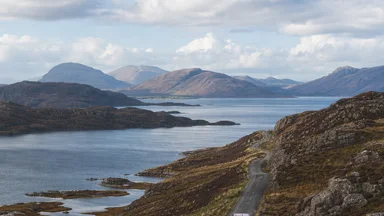
A Saturday afternoon hike near Åre, in central Sweden, seemed like a straightforward plan. The trail was well-marked, the weather held, and the group had packed water and sandwiches. But by late afternoon, one hiker's blister had turned septic — red streaks climbing up the ankle. The nearest Apoteket, in the town center, had closed at 2 p.m. The only pharmacy open on a Saturday evening was in Östersund, a 90-minute drive away, and it did not accept cash. The group had no card. The situation — painful, avoidable, and surprisingly common — illustrates a challenge of outdoor travel in Sweden: the combination of limited pharmacy hours and a cashless economy that many weekend visitors fail to anticipate.
The Saturday Afternoon Hike That Ended at a Locked Pharmacy
Sweden's state-run pharmacy chain, Apoteket, operates under a monopoly that keeps hours tight, especially outside major cities. In smaller towns and hiking gateways like Åre, Abisko, or Småland's forest villages, the Saturday closing time is often 2 p.m. Sunday sees almost all rural branches shut entirely. For a hiker who sets out at 10 a.m. and expects to pick up supplies on the way back, that window is easy to miss.
The cashless dimension compounds the problem. Sweden has moved aggressively away from physical currency. A 2024 survey by the Swedish Central Bank found that roughly 80 percent of Swedes no longer carry cash regularly. Apoteket stopped accepting cash in most locations by 2024, citing efficiency and security. This means that even if a traveler finds an open pharmacy, they may be turned away without a card or a digital payment method.
For short-haul trekkers — those doing a day hike or a weekend trip from a city like Stockholm or Gothenburg — the assumption is often that a pharmacy will be available like at home. But the combination of early closing, Sunday closure, and cashless policy creates a gap that a simple blister or allergic reaction can exploit. The hiker in Åre eventually got help from a hostel owner who drove them to a 24-hour clinic, but the ordeal cost hours and unnecessary pain.
This scenario repeats across the country. Near the Kungsleden trail, a popular multi-day route, the nearest pharmacy might be in Kiruna, which closes at 3 p.m. on Saturdays and does not open Sundays. Hikers who arrive late in the day or on a Sunday find themselves without access to antiseptic, blister plasters, or antihistamines — items that could easily have been packed in advance.
Why Apoteket Hours Are Worse Than They Seem
The root cause is the pharmacy monopoly. Apoteket AB, the state-owned company, controls the vast majority of pharmacy outlets in Sweden. While a few private chains like Kronans Apotek exist, they follow similar hours in rural areas. Competition is limited, so there is little incentive to extend hours in low-traffic locations. A 2023 report from the Swedish Competition Authority noted that pharmacy density in rural municipalities is roughly half that in urban areas, and operating hours reflect that disparity.
Sunday closures are nearly universal outside the three largest cities — Stockholm, Gothenburg, and Malmö — where a handful of 24-hour pharmacies operate. In a town like Abisko, with a population under 200, the pharmacy might be open only a few hours on weekdays and not at all on weekends. Holiday hours shrink further around Midsummer, Christmas, and Easter, when even city pharmacies may close early. A hiker planning a trip in late June might find the local Apoteket closed for the entire Midsummer weekend.
This is not a secret — the Apoteket website lists hours clearly — but it is not something most tourists check before a hike. The assumption that a pharmacy will be open when needed is a natural one, especially for travelers from countries with more flexible retail hours. In Sweden, that assumption can lead to a dead end.
Even when a pharmacy is open, the range of products available may be narrower than expected. Over-the-counter medications like antihistamines or painkillers are often kept behind the counter and require consultation with a pharmacist. During busy times, the wait can be long, cutting further into the limited open window. For a hiker in a hurry, this adds another layer of friction.
Cashless Sweden: The Card-Only Rule That Trips Up Tourists
Sweden's cashless transition is among the most advanced in Europe. By 2024, the majority of retail transactions were digital. Apoteket phased out cash at most locations starting in 2022, and by 2025, only a handful of branches in central Stockholm still accept physical currency. For tourists accustomed to carrying euros or dollars, this can be disorienting. A 2025 survey by Visit Sweden found that roughly 4 in 10 international visitors were unaware that many businesses do not take cash.
In hiking gateway towns, ATMs are scarce. Åre, for instance, has a few ATMs in the main square, but they may be out of service or charge high fees. Abisko has no ATM at all; the nearest is in Kiruna, 90 kilometers away. For a hiker who arrives without a card — perhaps because they lost it, left it at the hotel, or assumed cash would suffice — the options are limited.
The card-only rule applies to pharmacies, grocery stores, and even some cafes. A traveler who needs to buy a blister plaster at a pharmacy on a Sunday in a small town will find the door locked and no way to pay even if it were open. The system works well for locals who have cards and plan ahead, but it punishes spontaneity. For weekend hikers, who often rely on last-minute supply runs, this is a trap.
Some travelers try to use mobile payment apps like Swish, but Swish requires a Swedish bank account and a Swedish phone number. Foreign visitors cannot easily set it up. Contactless credit cards (Visa and Mastercard) are the standard, but not all cards work in all terminals. American Express is accepted in fewer places. A backup card from a different network is a sensible precaution.
Three Real-Life Scenarios Where the System Failed
Hiker near Kungsleden: no card reader, no cash, no help
A solo hiker on the Kungsleden trail in September developed a severe allergic reaction after a bee sting. The nearest village, Nikkaluokta, had a small shop but no pharmacy. The hiker had cash but no card. The shopkeeper could not sell antihistamines — only a pharmacy can dispense them — and the nearest pharmacy in Kiruna had closed for the day. The hiker was forced to wait until morning, when a bus driver offered a ride to Kiruna. The reaction worsened overnight. This story, shared on a hiking forum, is not unique.
Cyclist with allergic reaction in Småland on a Sunday
A cycle tourist in Småland developed hives after eating something on the trail. It was a Sunday. The only pharmacy in the region, in Växjö, was closed. The cyclist had a card but no phone signal to check hours. They rode 30 kilometers to find the pharmacy shut. Eventually, a local resident gave them an antihistamine from their own cabinet — a kind gesture, but one that carries legal risks in Sweden. The cyclist later wrote a blog post warning others to carry their own medication.
Family with sick child in a cabin without mobile signal
A family renting a cabin near Sarek National Park discovered their child had a fever and needed paracetamol. The nearest Apoteket was in Jokkmokk, 70 kilometers away, and closed on Sunday. The cabin had no phone signal. The father drove to Jokkmokk, found the pharmacy locked, and had to wait until Monday morning. The child recovered without serious issues, but the experience was stressful and avoidable with better planning.
What to Carry Instead of Cash (and Where to Store It)
The first line of defense is a contactless debit or credit card — Visa or Mastercard, preferably both. American Express is less useful. Some Swedish banks issue prepaid cards that work at Apoteket, such as ICA Banken's prepaid card, which can be loaded with Swedish kronor before the trip. These cards can be purchased at ICA supermarkets, which are widespread, but require a Swedish address for online registration — a hassle for short-term visitors.
An offline-first digital wallet like Google Pay or Apple Pay works at most terminals, including Apoteket, as long as the phone has enough battery. But in remote areas, charging points may be scarce. A power bank is essential. Some hikers carry a small solar charger. For emergencies, a sealed envelope with a few hundred Swedish kronor can help in rare cases where cash is accepted — though such cases are dwindling.
Beyond payment, the key is to carry a basic first-aid kit that includes antiseptic wipes, blister plasters, antihistamines, and painkillers. These items are cheap and light. A small tube of antibiotic ointment can prevent a blister from turning septic. A pair of tweezers for splinters or ticks is useful. The kit should be stocked before the trip, not after arrival.
Some hikers also carry a printed list of pharmacy locations and hours along their route, downloaded from the Apoteket website before leaving signal range. Paper maps and notes do not run out of battery. A laminated card with emergency contacts and a brief Swedish phrase like "Jag behöver ett apotek" (I need a pharmacy) can help in situations where language is a barrier.
How to Check Apoteket Hours Before You Walk
The official source is the Swedish healthcare information site 1177.se, which lists pharmacy hours and can filter by location. The Apoteket app also shows real-time hours and can locate the nearest open pharmacy. However, the app requires internet access. Downloading the information offline before heading into the backcountry is wise.
Calling ahead is another option. Rural branches may close for lunch — typically between 12:30 and 1:30 p.m. — which can catch visitors off guard. A quick phone call the day before can confirm hours. For multi-day treks, it pays to know the location of the nearest 24-hour pharmacy in advance. In northern Sweden, that might be in Kiruna or Luleå. In the south, Malmö has a 24-hour Apoteket at the central station.
Hiring a local guide who knows the logistics can save time. Many hiking outfitters in areas like Abisko or Jokkmokk include supply runs in their itineraries. A guide can also carry a more comprehensive first-aid kit. For independent hikers, the responsibility falls on themselves. A few minutes of research before the trip can prevent hours of distress on the trail.
Group hikes benefit from shared planning. One person can be assigned to pharmacy logistics — checking hours, stocking supplies, carrying backup payment methods. This distributes the burden and reduces the chance of oversight. In a group of four, at least two people should have a working card and phone with offline maps.
The One-Hour Window That Saves the Trip
The golden window for pharmacy visits in rural Sweden is Saturday morning, between 10 a.m. and 2 p.m. That one-hour closing gap — 2 p.m. — is the difference between a stocked pack and a crisis. Hikers who arrive in town on a Saturday before noon can buy blister plasters, antihistamines, and painkillers. After 2 p.m., the options shrink dramatically.
If arriving on a Friday, the pharmacy is typically open until 6 p.m. That is a good time to stock up for the weekend. For Sunday arrivals, the pharmacy will be closed. The alternative is to buy basic first-aid items at a grocery store like ICA or Coop, which may stock paracetamol, plasters, and antiseptic wipes. Grocery stores are not pharmacies, but they carry a limited range of over-the-counter products. Their hours are often longer — some rural ICA stores are open until 8 p.m. on Sundays, though this varies.
Meal planning should also account for pharmacy closures. If a hike requires refueling with snacks or drinks that might cause an allergic reaction, carrying antihistamines is prudent. Similarly, if the hike involves strenuous terrain, blister plasters are a must. The goal is to eliminate reliance on finding an open pharmacy mid-trip.
Some hikers argue that the system is not as bad as it sounds — that most problems can be solved with better planning. That is true. But the planning must be deliberate. A casual assumption that a pharmacy will be available is exactly what leads to the scenarios described. Sweden's system works for its residents, but it requires visitors to adapt. The one-hour window on Saturday morning is the most forgiving moment. After that, the margin for error narrows fast.
For travelers accustomed to countries where pharmacies are open late and cash is king, Sweden demands a shift in mindset. The country's efficiency in other areas — public transport, clean water, reliable trails — can lull visitors into complacency. The pharmacy gap is a reminder that even the best-planned trip can be derailed by a small oversight. A blister, a locked door, and a missing card: that is the chain of events that turns a pleasant hike into an ordeal. It does not have to happen. A few minutes of forethought, a backup card, and a basic first-aid kit are all it takes to stay ahead of the system.
Additional Scenarios to Consider
Beyond the common issues, there are other situations where pharmacy access becomes critical. For instance, a hiker with a chronic condition like asthma or diabetes may need to carry extra medication and supplies. In rural Sweden, finding an open pharmacy to refill an inhaler or buy insulin syringes can be impossible on a Sunday. A Swedish study from 2023 highlighted that diabetic hikers often face challenges accessing supplies during weekend trips, leading some to cut their hikes short.
Another scenario involves food allergies. A hiker who accidentally consumes something containing nuts or dairy may need antihistamines or an epinephrine auto-injector. These items are prescription-only in Sweden, so carrying them from home is essential. A 2024 report by the Swedish Food Agency noted that labeling in remote areas may be only in Swedish, increasing the risk of accidental ingestion.
In winter, the challenges multiply. Pharmacies in ski resort towns like Åre or Sälen may have extended hours during peak season, but many close by 4 p.m. on weekdays and 2 p.m. on Saturdays. A skier who suffers an injury on the slopes after 2 p.m. may find the pharmacy locked. The nearest emergency room might be an hour away, but for minor issues like a cut or sprain, a pharmacy would suffice. Carrying a comprehensive first-aid kit becomes even more important in winter conditions, where hypothermia can set in quickly if a minor injury delays return to shelter.
Group dynamics also play a role. In a large group, one person might have a card while others rely on cash. If that card is lost or damaged, the entire group is stranded. A backup plan should include multiple payment methods distributed among group members. For example, one person carries a Visa card, another a Mastercard, and a third carries a small amount of cash. This redundancy reduces the risk of being unable to pay at the one pharmacy that is open.
Finally, consider the role of technology. Many hikers rely on smartphones for navigation, communication, and payment. But in Sweden's remote areas, mobile coverage is patchy. The Swedish Post and Telecom Authority reported in 2024 that 15 percent of the country's land area lacks reliable mobile signal. This means that even if a pharmacy is open, a hiker may not be able to call ahead or use a digital wallet. Carrying a physical card and a printed map is a simple workaround.
These additional scenarios underscore the importance of proactive planning. The key takeaway is that Sweden's pharmacy system, while efficient for locals, requires visitors to be self-sufficient. By anticipating problems and carrying the right supplies, hikers can avoid the frustration of a locked door and a missing card. The goal is not to fear the system, but to respect its limitations and plan accordingly.
Practical Takeaways for Your Next Hike
So, what can you do to ensure a smooth trip? Start by checking the hours of the nearest Apoteket along your route. Use the Apoteket website or app to find locations and verify their Saturday and Sunday schedules. If you are hiking in a remote area, assume the pharmacy will be closed on Sunday and open only limited hours on Saturday. Plan your arrival accordingly.
Next, assemble a first-aid kit tailored to your needs. Include blister plasters, antiseptic wipes, painkillers, antihistamines, and any prescription medications. Pack enough for the entire trip, plus a few extra days in case of delays. Store the kit in a waterproof bag and keep it accessible.
For payment, carry at least two different cards from different networks (Visa and Mastercard) and a small amount of Swedish kronor as a backup. Inform your bank of your travel plans to avoid card blocks. Consider a prepaid card if you are concerned about fees or security.
Finally, share your itinerary with someone who can assist in an emergency. Leave a copy of your route and expected return time with a friend or family member. In the event of a problem, they can coordinate help or bring supplies. A little preparation goes a long way in ensuring that your Swedish hiking adventure remains a positive experience.