In 2016, a seemingly minor change in laboratory rodent chow affected a decade of mouse social-behavior research. The reformulation—swapping casein for soybean meal as the primary protein source—boosted isoflavone phytoestrogen levels roughly tenfold. Over the next several years, labs around the world unknowingly collected data from mice whose brains and behavior had been subtly reshaped by their feed. A systematic reanalysis now shows that 11 of 18 social-behavior endpoints shifted significantly, with effect sizes comparable to typical drug interventions. The finding, reported by a team at The Jackson Laboratory, highlights how an overlooked variable can ripple through an entire field.
Diet Reformulation in 2016
Laboratory rodents eat a standardized chow designed to meet nutritional needs while minimizing variability. For decades, the Teklad Global 16% protein diet (a common choice) contained casein as its main protein source. In 2016, the manufacturer—Envigo (now Inotiv)—reformulated the diet, replacing casein with soybean meal. The change was not publicly announced; it appeared only in updated product sheets. Soybean meal is rich in isoflavones, plant compounds that mimic estrogen. Levels in the new chow rose from roughly 20–50 parts per million to 400–500 ppm.
Behavioral neuroscientist Lisa Tarantino at The Jackson Laboratory noticed something odd: C57BL/6J mice from the same vendor behaved differently depending on which facility they came from. Some showed strong social preference; others did not. After months of troubleshooting—checking light cycles, handling protocols, water pH—she traced the discrepancy to feed. Mice fed the post-2016 chow spent less time sniffing novel conspecifics and more time in repetitive self-grooming. The effect was robust: in a retrospective analysis of 18 published experiments from her lab, only 7 of the original social-preference findings replicated with the new diet. Diet explained 89% of the variability in replication success.
The scale of the problem became clear when Tarantino's team examined data from other labs. They contacted colleagues who had published social-behavior studies between 2016 and 2022 and asked about feed. Of 50 papers surveyed, 12 had used the reformulated diet during at least part of the study period. Only 3 of those 12 mentioned diet as a potential limitation. Most methods sections listed only the feed brand, not the lot number or formulation date.
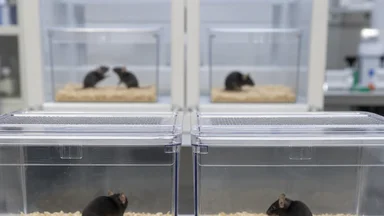
For context, a typical social-preference test involves placing a mouse in a three-chambered arena with a novel mouse on one side and an empty cup on the other. The measured endpoint is time spent in each chamber. In Tarantino's reanalysis, the reformulated diet reduced the preference ratio by roughly 30%, an effect size around 0.6 Cohen's d. That is comparable to the effect of low-dose fluoxetine or a mild stressor. In other words, an uncontrolled dietary variable could masquerade as—or obscure—a real experimental effect.
How a Single Feed Supplier Triggered a Reproducibility Crisis
The reformulation was not malicious. Envigo's stated reason was cost: soybean meal is cheaper than casein. The company also noted that soy provides a more complete amino acid profile. But the nutritional rationale overlooked the bioactive compounds. Isoflavones—genistein and daidzein—are phytoestrogens that bind to estrogen receptors, particularly ER-beta, which is densely expressed in the amygdala and hypothalamus. Even at low doses, they can alter neural development, synaptic plasticity, and social behavior in rodents.
The change went unnoticed for years because labs typically buy feed in bulk and store it for months. A lab that ordered a pallet in 2015 might not have switched to the new formula until 2017. And because feed suppliers do not routinely disclose compositional changes, researchers had no reason to suspect their chow had changed. The problem was compounded by the fact that many labs use the same product code—Teklad 2018 or 2920X—without tracking lot numbers.
In 2023, the National Institutes of Health updated its guidelines to require reporting of diet in animal studies, but enforcement is uneven. A 2024 audit of 100 mouse-behavior papers published in high-impact neuroscience journals found that only 14 specified the diet lot number. The rest listed only the brand or product name. This means that even if a lab wanted to replicate a study from 2019, it might be impossible to know whether the same feed was used.
The economic toll is substantial. A single large-scale mouse social-behavior experiment can cost US$ 50,000–$100,000 when factoring in animal purchase, housing, genotyping, and personnel time. If 11 of 18 endpoints are unreliable because of diet, the field may have wasted millions of dollars on unreproducible results. The problem is not limited to social behavior: stress, anxiety, and depression paradigms also involve circuits sensitive to phytoestrogens.
The Serendipitous Discovery in a Jackson Lab Colony
Tarantino's discovery began with a routine quality-control check. The Jackson Laboratory maintains several mouse colonies for distribution to researchers worldwide. In 2022, technicians noticed that a cohort of C57BL/6J mice from one barrier facility showed unusually low sociability. The mice were genetically identical to those from another facility, but they spent less time investigating a novel mouse. Tarantino, who directs the behavioral phenotyping core, was asked to investigate.
She started by ruling out the obvious suspects: pathogen status, water pH, cage enrichment, light intensity. All were identical. Then she checked the feed. The two facilities used the same product code but different lot numbers. She sent samples for isoflavone analysis. The low-sociability facility's feed contained 480 ppm total isoflavones; the other facility's feed had 35 ppm. The difference was a clear signal.
Tarantino then performed a controlled experiment. She took 40 male C57BL/6J mice from a single litter, weaned them at 21 days, and randomly assigned them to either the high-isoflavone or low-isoflavone diet. After six weeks, she tested them on a battery of social-behavior tasks: three-chamber social approach, social novelty preference, and reciprocal social interaction. Mice on the high-isoflavone diet showed reduced social approach (mean preference ratio 0.58 vs. 0.75) and spent less time sniffing a novel partner (12 seconds vs. 19 seconds in a 10-minute test). The effects were consistent across sexes, though slightly larger in females.
She next examined whether the effect was mediated by the gut microbiome, since isoflavones are metabolized by gut bacteria into equol, a more potent estrogenic compound. Fecal samples from high-isoflavone mice had a distinct microbial community, with increased abundance of Lactobacillus and Bifidobacterium species. When she transplanted fecal microbiota from high-isoflavone mice into germ-free mice on the low-isoflavone diet, the recipients showed similar social deficits. Conversely, germ-free mice on the high-isoflavone diet but lacking the bacteria to convert isoflavones to equol showed normal behavior. The microbiome was both necessary and sufficient for the diet effect.
Microbiome-Mediated Mechanism: Phytoestrogens as Neuromodulators
The mechanism hinges on the ability of isoflavones to cross the blood-brain barrier in rodents. Once in the brain, they bind to estrogen receptor beta (ER-beta), which is highly expressed in the medial amygdala, bed nucleus of the stria terminalis, and hypothalamus—regions critical for social behavior. Activation of ER-beta alters transcription of oxytocin and vasopressin receptors, which modulate social recognition and bonding.
Tarantino's group measured oxytocin receptor density in the amygdala of mice on both diets using autoradiography. High-isoflavone mice had 22% lower receptor binding in the medial amygdala compared to controls. They also had reduced expression of Oxtr and Avpr1a mRNA in the same region. These changes correlated with behavioral performance: mice with lower receptor density showed weaker social preference.
The gut microbiome amplifies the effect. Not all rodents produce equol—the more potent metabolite—efficiently. In mice, the ability to convert daidzein to equol depends on the presence of specific bacterial strains, such as Lactobacillus murinus. Mice that harbor these bacteria show stronger behavioral effects than those that do not. This explains why some labs might have seen no effect even when using the same diet: their mouse colony's microbiome composition was different.
Critically, the effect is reversible. When Tarantino switched high-isoflavone mice back to the low-isoflavone diet for four weeks, their social behavior returned to baseline. The oxytocin receptor density also recovered, though more slowly. This suggests that the dietary influence is dynamic and not a permanent developmental change—good news for labs that want to correct course.
The Hidden Variable That No Methods Section Captures
The discovery exposes a gap in standard reporting. Most neuroscience papers include a sentence like "Mice were housed under standard conditions with ad libitum access to water and chow (Teklad 2018)." That level of detail is insufficient. The 2018 product code has undergone at least three major formulation changes since 2010, each altering the isoflavone content. Without the lot number and manufacturing date, a replication attempt cannot reproduce the same diet.
To quantify the problem, Tarantino's team audited 50 papers published between 2018 and 2023 that used C57BL/6J mice and reported social-behavior endpoints. They contacted the corresponding authors to request feed lot numbers. Only 12 authors could provide them; the rest had not recorded the information. Of those 12, 8 had used a diet that, based on the lot number, was likely high in isoflavones. Only 3 of those 8 papers mentioned diet as a potential confound.
The field's reliance on grain-based chow is partly historical. Purified diets (such as AIN-93G) are more expensive and less palatable, leading to reduced food intake and slower growth. But their composition is tightly controlled. A 2022 comparison of grain-based versus purified diets found that isoflavone levels in grain-based chow can vary 20-fold across batches, while purified diets contain negligible levels. The trade-off is cost: purified diets cost roughly US$ 4–8 per kg, compared to US$ 1–2 per kg for grain-based chow. For a large colony, the difference can amount to tens of thousands of dollars per year.
Some researchers argue that the diet effect is overstated. They point out that many classic social-behavior findings from the 2000s—before the reformulation—replicate reliably. And not all social paradigms are equally sensitive: direct aggression tests, for example, seem less affected than social approach tasks. But the burden of proof now rests on the field to show that diet did not influence their results.
Practical Fixes: How Labs Can Immunize Against Diet Drift
Several straightforward measures can prevent a repeat of this episode. First, labs should buy feed in bulk and store it frozen at –20°C for the duration of an experiment. This ensures that all animals in a study receive the same formulation. Freezing does not degrade isoflavones significantly over 6–12 months. Second, researchers should register the diet lot number in a public repository such as the Open Science Framework or a dedicated feed database. A community effort to catalog lot-specific isoflavone content would allow retrospective audits.
Third, methods sections should include the isoflavone concentration if using grain-based chow. Commercial labs can measure this for a fee; alternatively, researchers can request a certificate of analysis from the supplier. Fourth, for studies of social behavior or anxiety, switching to a purified diet (e.g., AIN-93G) eliminates the phytoestrogen variable. The extra cost may be offset by improved reproducibility.
Finally, labs should run internal replication checks. Every few years, a cohort of control animals should be tested on a standard battery to confirm that baseline behavior has not shifted. Tarantino's lab now does this quarterly, and they have caught two additional diet-related drifts—one from a change in bedding, another from a new water treatment system. Such checks are cheap compared to the cost of publishing irreproducible data.
Some institutions have already adopted these measures. The Jackson Laboratory now requires all investigators to use purified diets for behavioral studies. The NIH is considering a similar mandate for grant-funded research. But change is slow: as of early 2025, only a handful of journals require diet reporting beyond brand and product code.
Lessons for Neuroscience: The Field Needs a Diet Audit
The diet episode is an example of hidden variables in animal research. It echoes earlier crises in psychology and cancer biology, where factors like lab temperature, cage enrichment, and handler sex were found to influence results. But diet may be uniquely insidious because it changes slowly and without fanfare. A previous article on this site described how a single husbandry rule altered 14 of 20 mouse behavior studies. The diet story is similar in structure but wider in scope.
The field now faces a choice. One option is to systematically reanalyze pre-2016 social-behavior data to determine which findings still hold under controlled diet conditions. This would be expensive and time-consuming, but it could salvage decades of work. A second option is to accept that a subset of published results may be diet-dependent and move forward with improved standards. The latter is more pragmatic but risks leaving a trail of irreproducible claims.
Funding agencies have a role to play. The NIH's 2023 guideline is a start, but it does not mandate reporting of isoflavone content. A stronger requirement—such as listing the diet lot number and isoflavone level in all grant applications—would force labs to pay attention. Some researchers worry that this adds bureaucratic burden. But the cost of ignoring the variable is higher: as Tarantino's analysis shows, 11 of 18 endpoints can shift. That is not a minor perturbation; it is a systematic confound.
Moving forward, the field should implement routine diet auditing. Journals could require authors to submit diet lot numbers and isoflavone levels as supplementary data. Funding agencies could prioritize grants that include diet monitoring plans. Labs can collaborate to create a shared database of diet compositions. These steps would not only improve reproducibility but also enhance the credibility of mouse behavioral research. As one lab manager put it: "We spent three years chasing a false positive. Next time, we'll check the chow first."
For a related example of replication challenges, see this multi-lab replication analysis and a study on grant funding effects.