Hotel bag drops are a fixture of travel advice: check out, leave your suitcase with reception, and collect it later. In Japan, this habit costs you time and flexibility. A better system already exists—the coin locker network that blankets every major transit hub. With tens of thousands of units across Tokyo alone, these lockers are cheaper, faster, and more secure than hotel storage. Here is why you should skip the front desk and head straight for the station.
The Hotel Bag Drop Trap – Why Your Checkout Morning Is Wasted
Most hotels in Japan lock bags in a storage room until the standard 3 PM check-in time. That means if you check out at 10 AM, you have five hours of sightseeing ahead—but you also have to return to the hotel before closing to retrieve your luggage. The detour eats 20 to 40 minutes, often during the prime midday window when temples and museums are open.
In Kyoto, a city where tourists outnumber residents roughly 10 to 1 during peak seasons, hotels report that roughly 70 percent of same-day bag drops are collected within three hours. That suggests many travelers are making a special trip back to the hotel, not passing by organically. The bell staff are polite, but the queue can be long—especially at larger properties near Kyoto Station.
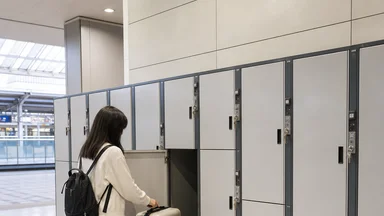
Coin lockers, by contrast, offer 24/7 access. You drop your bag at a station locker, explore freely, and retrieve it whenever you need—no front desk hours, no queue, no tip. Tokyo Station alone has over 5,000 lockers spread across 14 locations within the station complex. The density means you are rarely more than a few minutes from an available unit.
The hotel bag drop is not useless—if your hotel is directly on your route and you plan to return anyway, it can be convenient. But for most travelers, the locker network offers a faster, less constrained alternative.
Coin Locker Network Density – A Grid That Outpaces Any Hotel Chain
Japan's coin lockers are not an afterthought; they are a designed feature of the transit system. In Osaka's Namba district, you will find roughly one locker per 200 meters of shopping arcade. The units are clustered near station exits, underground passages, and major department store entrances. You can almost always see the next bank of lockers from the one you are standing at.
JR East, the railway operator serving the Tokyo region, runs about 12,000 lockers across its stations. That number does not include private operators like Coin Locker Service or the lockers inside subway stations. In Shibuya, a new underground locker hub opened in 2025 with 800 units alone, designed specifically for same-day storage and luggage forwarding pickup.
The average walk from any major station exit to a vacant locker is roughly four minutes, based on anecdotal reports from frequent travelers. Hotels, by contrast, have one storage room per property, often locked after 10 AM until check-in time. If you arrive at 9 AM and your room is not ready, you are still stuck carrying your bag—or waiting for the storage room to open.
This density creates a grid that covers the entire urban area. You are never far from a locker, and you never need to plan ahead. The network is self-healing: if one bank is full, the next one is a short walk away.
The Price Gap – ¥300–700 per Day vs. Free Hotel Storage? Not Really
Hotel bag drops are advertised as free, but they are not without cost. Tips to bell staff are expected in many mid-range and upscale hotels—typically ¥200 to ¥500 per bag, though the practice is not universal. More importantly, the 'free' storage kills your flexibility: you must return before the storage room closes, often by 8 PM or earlier at smaller properties.
Coin lockers charge a flat daily fee. A large locker at Shinjuku Station costs ¥700 per day, or about US$4.60 at late-2025 exchange rates. A medium locker runs ¥500, and a small unit—enough for a daypack or shopping bag—costs ¥300. Overnight storage is allowed at most lockers for the same fee, though some stations clear lockers after midnight and require a new payment in the morning.
If you are doing a same-day transfer—say, checking out of a Tokyo hotel and catching an evening Shinkansen to Kyoto—the locker cost is trivial compared to the time saved. A hotel bag drop would require you to return to the hotel, wait in line, then commute to the station. A locker at Tokyo Station lets you store your bag the moment you arrive, explore the Marunouchi side or the Imperial Palace, and pick it up on your way to the platform.
The price gap narrows when you consider that hotel storage is effectively free if you are staying at the property and returning anyway. But for same-day transfers, the locker is cheaper per hour of freedom.
Transit Hubs Double as Luggage Arteries – Route Planning That Saves Hours
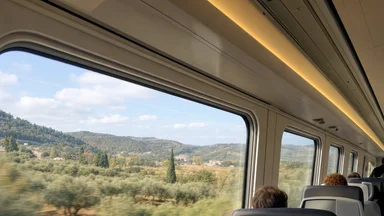
Shinkansen stations are designed with lockers inside the gate lines. That means you can drop your bag at the departure station, ride the train, and pick it up at the arrival station—without ever leaving the transit system. The time savings compound when you factor in the walk from the station to your hotel.
Consider a typical Kyoto-to-Osaka day trip. The train takes roughly 30 minutes. If you store your bag at Kyoto Station, you can explore Osaka's Dotonbori area, then retrieve your bag on the way back to your Kyoto hotel. The alternative—leaving the bag at the hotel, returning to collect it, then heading to the station—adds at least 45 minutes of dead time.
Narita Express lockers at Tokyo Station allow you to store luggage before airport check-in, freeing you for a final morning of sightseeing. Some stations, like Shinjuku and Ueno, have locker counters where staff can help you find a vacant unit using a real-time map. Google Maps now shows real-time locker availability for selected Tokyo stations, though the feature is still rolling out as of late 2025.
This integration with transit is the network's killer feature. Hotels are not connected to the train schedule; lockers are. You can plan your route around locker locations, not the other way around.
The Hidden Failure of Hotel Bag Drop – Security and Liability
Hotel storage rooms are often unmonitored. Staff may place bags on open shelves in a back office or a locked closet, but the room is usually accessible to employees throughout the day. Lost or damaged luggage claims against hotels in Japan are compensated less than 30 percent of the time, according to consumer affairs data cited by travel insurers.
Coin lockers provide individual keys or electronic PINs. The unit is yours alone until you retrieve the bag. Most locker operators insure contents up to ¥100,000 (about US$650) against theft or damage, though the terms vary. You should still keep valuables with you, but the locker is more secure than a shared hotel room.
There is no queue, no paperwork, no tip. You insert coins or use an IC card, turn the key, and walk away. Retrieval is equally fast. The system is designed for speed, not hospitality.
One caveat: lockers at smaller stations may be older and less secure. Some use mechanical keys that can be duplicated, though this is rare. Electronic lockers with PIN codes or Suica card access are increasingly common at major hubs.
Three Practical Routes That Exploit the Locker Network
Route A: Ueno to Asakusa. Store your bag at Ueno Station (multiple locker banks near the park exit). Walk to Asakusa via the Sumida River—about 20 minutes. Explore Senso-ji temple and Nakamise Street. Retrieve your bag before the evening train to Nikko or Narita. Total locker cost: ¥400–700, depending on size.
Route B: Shin-Osaka to Himeji. Leave your bag at Shin-Osaka Station (lockers inside the Shinkansen gate area). Take the 30-minute train to Himeji, visit the castle, and return to Shin-Osaka. Pick up your bag and continue to Kyoto. No hotel detour needed. This route saves roughly 90 minutes compared to returning to a hotel in Osaka.
Route C: Hakata Station to Canal City. Store bags at Hakata Station (lockers near the Chikushi exit). Walk directly to Canal City Fukuoka—about five minutes. After shopping, retrieve bags and walk to your hotel. The lockers at Hakata are large enough for a standard suitcase and backpack.
All three routes have locker banks within a five-minute walk from station exits. For multi-city loops, combine lockers with luggage forwarding services like Yamato Transport or Sagawa. Forward the main suitcase to the next hotel, and keep a daypack in a locker for the middle segment.
Trade-Offs and Counter-Arguments – When Hotel Bag Drop Still Wins
Coin lockers are not perfect. Finding a vacant large locker at peak times—say, 10 AM at Tokyo Station—can be a challenge. The station's 5,000 lockers fill quickly, and you may need to walk to a farther bank or wait for someone to retrieve their bag. Some travelers report circling for 10–15 minutes before finding a spot. In contrast, hotel bag drops never have a 'full' problem; the storage room can theoretically hold dozens of bags.
Another limitation: coin lockers require exact change or an IC card. While most modern lockers accept Suica, Pasmo, or credit cards, older units still demand ¥100 coins. If you have only large bills, you may need to buy a drink or use a change machine. Hotels, by contrast, accept any payment method (or none) and handle the logistics for you.
For travelers with oversized luggage—golf bags, ski equipment, or musical instruments—standard lockers may be too small. Large lockers accommodate a 29-inch suitcase, but anything bigger might not fit. In that case, hotel storage or luggage forwarding is the only option. Some stations have 'oversized luggage lockers' but they are rare and often booked in advance.
Security is another trade-off. While lockers are generally secure, the key-based ones can be picked with basic tools, though incidents are extremely rare. Electronic lockers are safer but require remembering a PIN. If you lose the key or forget the code, you may have to wait for station staff to cut the lock, which can take 30 minutes or more. Hotels, on the other hand, have staff on hand to retrieve your bag instantly if you present your claim ticket.
Finally, hotel bag drops are simpler for non-tech-savvy travelers. No need to navigate a station map, find a locker bank, or worry about payment. For elderly visitors or those with mobility issues, the front desk is a familiar, low-stress option. The coin locker network rewards independence and planning, but it can be intimidating for first-time users.
Expanded Route Examples – More Ways to Save Time
Route D: Shinjuku to Harajuku and Shibuya. Store your bag at Shinjuku Station's south exit locker bank (near the bus terminal). Walk to Harajuku (10 minutes), explore Takeshita Street and Meiji Jingu. Then walk to Shibuya (20 minutes), visit the scramble crossing and Hachiko statue. Retrieve your bag from Shinjuku and catch a train to Narita or Haneda. Total locker cost: ¥500–700. This route eliminates the need to return to a hotel in Shinjuku, saving 30–40 minutes.
Route E: Nagoya Station to Nagoya Castle and Osu. Nagoya Station has over 2,000 lockers, many near the Shinkansen gates. Store your bag, take the subway to Nagoya Castle (15 minutes), then walk to Osu Kannon temple and the shopping district. Return to Nagoya Station, retrieve your bag, and board a train to Osaka or Tokyo. Locker cost: ¥400–600. The alternative—leaving the bag at a hotel near the station—would require a backtrack of 20 minutes.
Route F: Sapporo Station to Odori Park and the Clock Tower. Sapporo Station's lockers are located in the underground walkway connecting to the Odori subway station. Store your bag, walk to Odori Park (5 minutes), visit the TV Tower and Clock Tower, then walk to the Susukino entertainment district. Retrieve your bag and head to New Chitose Airport. Locker cost: ¥300–500. This route is ideal for a layover day in Hokkaido.
These routes demonstrate the network's versatility. Whether you are in a major metropolis like Tokyo or a regional hub like Sapporo, lockers are strategically placed to maximize sightseeing time. The key is to identify locker locations before you travel—most station maps are available online or on apps like Google Maps.
How to Combine Lockers with Luggage Forwarding – The Ultimate Strategy
For multi-city itineraries, a hybrid approach works best. Forward your main suitcase from your current hotel to the next hotel using Yamato Transport (takkyubin). The service costs about ¥2,000–3,000 per bag and delivers next day. Meanwhile, keep a daypack in a station locker for the day's sightseeing. This frees you from carrying heavy luggage while still having essentials handy.
Example: You are in Osaka and heading to Kyoto for two days, then Tokyo. Forward your large suitcase from your Osaka hotel to your Tokyo hotel. On the day of departure, store a small bag with a change of clothes at Osaka Station's locker. Explore Osaka for a few hours, retrieve the bag, and take the Shinkansen to Kyoto. In Kyoto, use lockers for day trips to Nara or Uji. When it's time to go to Tokyo, your main suitcase is already waiting at your Tokyo hotel. This strategy eliminates all hotel bag drops and maximizes every hour.
The cost of forwarding plus locker fees is still lower than the opportunity cost of lost sightseeing time. A typical hotel bag drop round trip takes 40 minutes; over a two-week trip, that adds up to several hours. For the price of a coffee, lockers give you those hours back.
Conclusion – Skip the Front Desk, Head to the Lockers
The coin locker network is not a secret—Japanese travelers use it constantly. Foreign tourists often overlook it, trained by hotel marketing to think of bag storage as a courtesy service. It is, in fact, a product, and the locker network offers a better deal. Next time you check out, skip the front desk queue. Walk to the station, find a locker, and reclaim your morning.
Remember to carry ¥100 coins or an IC card with sufficient balance. Check locker availability on apps if possible. And always keep valuables with you. With a little planning, you can turn your transit time into exploration time. Japan's coin lockers are waiting—make them part of your travel routine.